 A series of articles on the 70-week prophecy of Daniel 9 is available on this site (see here). The current article is a summary of those articles. It provides an overview of specific aspects, discusses the major points of disagreement, and evaluates the four major interpretations, namely, the Symbolic, Liberal, Dispensational, and Historical Interpretations.
OVERVIEW OF DANIEL 9
Daniel received the prophecy while Israel was in captivity in Babylon, and Jerusalem and the temple were in ruins. In the first 19 verses of Daniel 9, Daniel prayed for Jerusalem, the temple, and his people. While he was still praying, the angel Gabriel appeared to him and gave him this extremely compact prophecy. It is only four verses, but it is critical for understanding end-time events.
Daniel 9:24
“Seventy weeks have been decreed for your people and your holy city, to finish the transgression, to make an end of sin, to make atonement for iniquity, to bring in everlasting righteousness, to seal up vision and prophecy, and to anoint the most holy place.” (NASB)
This verse grants Israel 70 weeks to fulfill six profound goals. For some, these goals were fulfilled in Jesus, 2000 years ago. For others, they will only be fulfilled when He returns.
Israel had two types of weeks: weeks of days and weeks of years. In the weeks of years, every seventh was a year of rest; a sabbath for the land. Most interpreters accept that the weeks in Daniel 9 are weeks of years. Then the 70 weeks are equal to 490 years.
Daniel 9:25
“So you are to know and discern that from the issuing of a decree to restore and rebuild Jerusalem until Messiah the Prince, there will be seven weeks and sixty-two weeks; it will be built again, with plaza and moat, even in times of distress.” (NASB)
In other words, the 490 years would begin with the issuing of a decree to restore and rebuild Jerusalem. 7+62=69 weeks (483 years) later, the Messiah Prince would appear. This implies that the goals in verse 24 would be fulfilled through the Messiah.
Daniel 9:26
“Then after the sixty-two weeks the Messiah will be cut off and have nothing, and the people of the prince who is to come will destroy the city and the sanctuary. And its end will come with a flood; even to the end there will be war; desolations are determined.” (NASB)
While verse 25 describes the rebuilding of Jerusalem and the arrival of the Messiah, verse 26 predicts how both will come to their end. For many interpreters, the Messiah is Jesus Christ, and the destruction of the city was the destruction of Jerusalem in 70 AD.
In verse 25, the messiah appears at the end of the first 483 years. In contrast, verse 26 uses the word “after” to say that the messiah will die, and the city will be destroyed, some undefined time AFTER the end of the 483 years.
Daniel 9:27
“And he will make a firm covenant with the many for one week, but in the middle of the week he will put a stop to sacrifice and grain offering; and on the wing of abominations will come one who makes desolate, even until a complete destruction, one that is decreed, is poured out on the one who makes desolate.” (NASB)
Verse 27 focuses on the 70th week (the last seven years), which is the core of the prophecy. Except for the rebuilding of the city, nothing happens during the first 483 years. The Messiah arrives at the end of the 483 years and is killed some undefined period after the 483 years.
Verse 27 mentions two people. First, “he” will make a firm covenant for the entire seven years, but put a stop to sacrifice in the middle of the seven years. Then “one who makes desolate” will destroy. In some interpretations, these are two different people. In others, they are the same.
INTERPRETATIONS OF DANIEL 9
Views of the Final Seven Years
There are four main interpretations. Particularly, the final seven years are interpreted very differently by the different schools:
In the Liberal Interpretation, the final seven years describe the work of the Greek King Antiochus in the 2nd century BC.
In the Historic-Messianic interpretation, the final seven years describe the time of Christ, 2000 years ago: The “he,” who put an end to sacrifice, is Christ. His death put an end to the Jewish sacrificial system. This was followed by the destruction in verse 27, namely, of Jerusalem in AD 70.
In Dispensationalism, the last seven years describe an Antichrist during the 7 years immediately before Christ’s return.
In the Symbolic interpretations, the last seven years also describe the end-time rule of an Antichrist, but not a literal seven years. The time periods are symbolic.
Messianic-Historical Interpretation
In this view, the entire prophecy was fulfilled in Jesus Christ, 2000 years ago:
The 490 years began with Artaxerxes’ first decree in 458/7 BC.
The first 49+434=483 years ended with Jesus’ baptism. The last seven years began at that same time.
3½ years later, or in the “midst of a week,” He was killed, causing “sacrifice and the oblation to cease” (v27), not literally, but in terms of significance.
The 490 years did not end when Jesus died. For a number of years after His death, God sent the Holy Spirit with extraordinary power, but to Jews only. Israel had one final opportunity to repent. The 490 years ended 3½ years after Jesus’s death, when Israel, by persecuting His Spirit-filled disciples, also rejected the Holy Spirit.
Therefore, the final seven years began 3½ years before Jesus died, and ended 3½ years after He died.
Since 490 years were decreed for Jerusalem (Dan 9:24), Jerusalem was not destroyed during those 490 years, but only later, in 70 AD.
Dispensational Interpretation
In this view:
The 490 years began with Artaxerxes’s second decree in 445/4 BC (Neh 1-2).
The first 483 years ended with Jesus’s triumphal entry into Jerusalem, a few days before His death.
The period between Artaxerxes’s second decree and Jesus’s triumphal entry is not equal to 483 literal years. However, in Dispensationalism, the years are interpreted as prophetic years of 360 days each. This reduces the period by about 7 literal years.
The final seven years do not follow immediately after the first 483 but are the seven years immediately before Christ’s return, commencing with the rapture of the church. During those final seven years, the Antichrist will oppress the Jews and bring upon the world a tribulation worse than ever seen.
Liberal Interpretation
Most Liberals do not believe in miracles or divinely inspired prophecies of future events. For them, the Bible is simply the product of the evolution of human thought. In this view, since the Book of Daniel explicitly mentions the Medo-Persian and Greek Empires, Daniel was written after these empires already existed. Specifically, Liberals believe that Daniel was compiled during the mid-2nd century BC, and that the crisis in Daniel, including in Daniel 9, was the persecution of Jews by the Greek king Antiochus Epiphanes, around the year 167 B.C.
Symbolic Interpretation
Daniel’s prophecies are symbolic. For example, in Daniel 7, animals symbolize consecutive empires. But Daniel 9 seems more literal. For example, the city is the literal Jerusalem, the Messiah is Jesus Christ, and the weeks are literal weeks of years. However, in the Consistent Symbolical Interpretation, Daniel 9 is also symbolic: Jerusalem symbolizes the Church. The periods are symbols: The first 7 weeks symbolize the time before Christ, the 62 weeks are the Church Age, and the final week is the end-time rule of the Antichrist.
The purpose of this article series is to determine which of these is the correct interpretation.
THE 70 WEEKS ARE GOD’S COVENANT.
This section shows that, by giving the 70-week prophecy, God renewed His covenant with Israel for 490 years:
The Old Testament Covenant Pattern
In the Old Testament, God made a covenant with Israel. Leviticus 26 gives the covenant/exile pattern. Israel’s calendar had both weeks of days and weeks of years. In the weeks of days, every seventh day was a sabbath for the people. They had to rest. In the weeks of years, every seventh year was a sabbath for the land. The people had to allow the land to rest. God based His covenant on the weeks of years (Lev 25:2-4):
(1) Should Israel be unfaithful, as evidenced by non-compliance with the annual Sabbaths (Lev 26:14-39),
(2) God will send them into exile, one year for every Sabbath year not observed (Lev 26:33-35; 43).
(3) But if Israel in exile repents and confesses its iniquity (Lev 26:40-41, 44),
(4) God will renew His covenant (Lev 26:42, 45).
The Covenant Pattern in Daniel 9
Daniel 9 consists of Daniel’s prayer and the prophecy he received while praying. As shown by the following, the Levitical covenant pattern unites the prayer and prophecy:
(1) Israel was in Exile due to the Covenant.
At the time of Daniel, Israel was in exile in Babylon. Jeremiah prophesied that Israel would remain in Babylon for 70 years. Chronicles interpreted Jeremiah’s prophecy as that “the land had enjoyed its sabbaths.” These sabbaths for the land were the annual sabbaths. Since the covenant was based on the weeks of years, the statement in Chronicles confirms that Israel was in exile due to unfaithfulness to the covenant (Jer 29:10; 2 Chron 36:21).
(2) Daniel asked God to renew His covenant.
Daniel’s prayer is replete with covenant terminology. For example, the peculiar covenant name YHWH (Dan 9:2, 4, 10, 13, 14, 20), Daniel’s reference to God as Him who “keeps the covenant” (Dan 9:4), and Daniel’s acknowledgment that the exile was a covenant penalty. These references to the covenant imply that Daniel’s prayer was based on the covenant. As required by the covenant, Daniel confessed Israel’s guilt and prayed to God to renew His covenant (Dan 9:5-11; 18-19).
(3) The 70 weeks extended God’s Covenant.
Argued as follows, the 70-week prophecy was a promise by God to renew His Covenant with Israel:
(a) The prophecy was the answer to Daniel’s prayer, which was a request, based on the covenant, for covenant renewal.
(b) The phrase “seventy sevens” means 70 weeks of years, and God made the weeks of years part of His Covenant.
(c) As stated above, in the covenant, Israel would be in exile one year for every sabbath year not observed. Therefore, the 70 years of exile were the penalty for 70 sabbath years not observed, which is equivalent to 70×7=490 years of disobedience. Therefore, the 70 weeks (490 years) promised in Daniel 9 were to replace the previous 490 years of covenant time which Israel wasted through disobedience.
Main Conclusions
In God’s covenant with Israel, God warned that He would exile them if they were unfaithful to the covenant. But if they confessed their guilt and repented while in exile, God would renew His covenant with them and restore them to Israel.
When Daniel received the vision, Israel was in exile due to unfaithfulness. They were in exile for 70 years because they were unfaithful for 490 years.
Daniel, in prayer, confessed Israel’s guilt and asked God to renew His covenant with Israel.
By giving the seventy-week prophecy, God renewed His covenant with Israel. However, that renewed covenant had a specific purpose and duration (490 years), as stated in verse 24.
Therefore, the covenant that is confirmed during the last seven years (Dan 9:27) is still God’s covenant with Israel, not the covenant of an Antichrist, as Dispensationalism claims.
For the detailed article, see here.
DECREE THAT BEGAN THE 70 WEEKS
The 490 years begin with “a decree to restore and rebuild Jerusalem” (Dan 9:25). Interpreters have suggested several different decrees, issued by different Persian kings.
What ‘restore’ means
The decree will both “restore” and “rebuild” Jerusalem. To identify the right decree, it is important to distinguish between these two terms. The word translated as “restore” (shûb) does not mean the same as “rebuild.” To rebuild refers to physical reconstruction. But shûb means to return ownership of a city to the previous owner (e.g., I Kings 20:34).
In Daniel 9, “restore” means more than merely allowing the Jews to live in the city. Since Jerusalem was Israel’s judicial capital, to restore the city means to return it to the Jews to serve as their capital from where they would govern themselves according to their own laws.
Alternative Proposed Decrees
Jeremiah’s Prophecy
In the Liberal view, as stated, Daniel 9 describes the persecution of the Jews by the Greek king Antiochus IV around 165 BC. To fit 490 years between the decree and the time of Antiochus, Liberals have to select the earliest possible decree. Some Liberals propose that the decree was a prophecy by Jeremiah that God would bring Israel back from exile. But even if we take the earliest possible such prophecy, we still only have 440 years between the ‘decree’ and Antiochus, not the 490 years required by the prophecy.
Cyrus’ decree in 538/7 BC
In 538/7 BC, Cyrus issued a decree in which he announced: “The God of heaven … has appointed me to build a temple for him at Jerusalem in Judah” (Ezra 1:2-4). The decree allowed the Jews to return to Judea and to rebuild the temple. By implication, it also allowed them to rebuild Jerusalem. But that decree did not “restore” Jerusalem, for it did not allow the Jews to govern themselves. They were still ruled directly by Persian laws.
Darius’ decree in 520 BC
In response to Cyrus’ edict, the Jews began to slowly return to their homeland. Zerubbabel and Joshua began to rebuild the temple, but were opposed by Israel’s old enemies—the Samaritans, who complained to the Persian authorities (Ezra 5). This confirms that the city was still under Persian jurisdiction and had not yet been ”restored.” In response, Darius affirmed Cyrus’ decree through an additional edict (ca. 520 BC) (Ezra 6:3-12). Darius’ decree mentioned only the restoration of the temple and simply confirmed and expedited Cyrus’ order. It still did not return ownership (restore) of Jerusalem to Israel.
Artaxerxes’s Two Decrees.
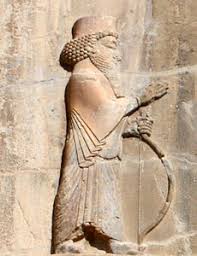
 Artaxerxes I issued two decrees. The first, recorded in Ezra 7:12-26, was in the seventh year of his reign (Ezra 7:7), namely in 458/7 BC.
Thirteen years later, in 445/4 BC, Nehemiah, Artaxerxes’s cupbearer, received a report that “the wall of Jerusalem is broken down, and its gates are destroyed by fire” (Neh 1:3; 2:1, 3). Deeply distressed that the city had not yet been rebuilt, he requested and obtained permission from Artaxerxes to go to Jerusalem and rebuild the city (Neh 2:5).
Which decree fits the prophecy?
One of Artaxerxes’ two decrees must be the one intended by Daniel 9:24. Dispensationalism prefers the second decree. However, for the following reasons, Artaxerxes’ first decree in 458/7 should be accepted as the decree to restore and rebuild Jerusalem:
(1) Restored the city.
The first decree, for the first time, “restored” the city to Israel because it granted Israel authority to govern itself based on God’s law (Ezra 7:26). The second decree did not “restore” the city because:
- The first decree already restored it.
- The second decree said nothing about the Jews ruling themselves. It only dealt with the physical construction of the city walls.
(2) Fits the time of Christ.
According to Daniel 9:25, the Messiah (Jesus Christ) would appear (7+62)x7 = 483 years after the decree.
Artaxerxes’ first decree fits the time of Christ. Jesus’ public ministry began when He was anointed by the Holy Spirit at His baptism (John 1:31; Acts 10:37, 38) in the fifteenth year of the Roman emperor Tiberius (Luke 3:1, 5, 21), which was the year AD 26/27; exactly 483 years after the decree in 458/7 (457 + 27 – 1 = 483). (One year is deducted because there was no year nil.)
The decree of 445/4 BC does not fit the time of Christ. Adding 483 years to 445/4 BC takes us to about seven years after Jesus died. To make the 445/4 fit the time of Christ, Dispensationalism interprets the 483 years as ‘prophetic years’ of 360 literal days each. This reduces the 483 years by about 7 literal years. However, since the 70 weeks are a renewal of God’s covenant with Israel, and since the covenant was based on Israel’s weeks of years, the 70 weeks in Daniel 9 are ‘covenant weeks,’ equal to 490 literal years, not ‘prophetic years’.
Furthermore, even interpreting the 483 years as “prophetic years” brings us to Jesus’ triumphal entry into Jerusalem, but that was only a few days before His death. It was the END of His ministry, not the beginning, as required by Daniel 9:25. As stated, Jesus’ ministry began about three years earlier when He was “anointed” at His baptism.
(3) Authorized Rebuilding Jerusalem.
Dispensationalism argues that the first decree did not authorize the rebuilding of Jerusalem. Dispensationalism claims that the second decree was the first to authorize the rebuilding of Jerusalem. However:
(a) The previous decrees by Cyrus, Darius I, and Artaxerxes I, by allowing the Jews to return to Judah, to rebuild the temple, and to govern themselves, all obviously implicitly allowed the Jews to rebuild their cities.
(b) Much evidence exists, as listed in the detailed article, that the construction of the walls began before Nehemiah arrived.
Main Conclusions
The 490 years begin with a decree to restore and rebuild Jerusalem. While rebuild means physical reconstruction, to restore Jerusalem means to return ownership of the city to the Jews to serve as their capital from where they would govern themselves according to their own laws.
Artaxerxes’s first decree in 458/7 fits this description. Firstly, by granting Israel authority to rule itself according to God’s laws, it restored the city. Secondly, fits the time of Christ exactly. Thirdly, it implicitly authorized Israel to rebuild Jerusalem.
For the detailed article, see here.
END OF THE 490 YEARS
Covenant continued after Jesus died
In Dispensationalism, as stated, the first 483 years of God’s covenant with Israel ended at the Cross, and the last seven years will be the seven years before Christ returns. However, the first chapters of Acts show that God’s covenant with Israel continued for a few years after Jesus died. For example:
After Jesus died, God sent His Holy Spirit with power, but to Israel alone (Acts 10:45, 47-11:3, 18, 19).
God poured out His Holy Spirit on Pentecost, a feast day when Jews from all over the world were gathered in Jerusalem (Acts 2:10, 5). On that day, 3000 Jews repented (Acts 2:38, 41).
To allow Peter to preach to the Jews at the temple, God healed a lame man at the temple (Acts 3:2, 7). Thousands more repented (Acts 3:19; 4:4).
The angel, who released the apostles from jail, told them to speak to the people in the temple. They preached every day in the temple (Acts 5:18, 20, 42).
God exalted Jesus “to His right hand … to grant repentance to Israel, and forgiveness of sins” (Acts 5:31).
In those first chapters of Acts, not a single non-Jew accepted the gospel or received the Holy Spirit (cf. Acts 10:45). The church consisted of Jews only (Acts 6:7).
The first time that Gentiles received the Holy Spirit was after Peter received the vision of the unclean animals (Acts 10:11-12, 19-20). Prior to that, the Christians, all of them Jews, thought of Gentiles as “unholy or unclean” (Acts 10:28; 11:12), that God preferred Jews over Gentiles (Acts 10:34-35), and that only Jews could receive the Holy Spirit (Acts 10:23, 44-45). Jews did not associate with Gentiles (Acts 11:2-3) and did not proclaim the gospel to them. However, through Peter’s vision and the subsequent events of Acts 10, God taught the Christian Jews to take the gospel message also to Gentiles.
In short, God’s covenant with Israel did not end when Christ died. During the years after the Cross, God gave Israel, as a nation, one final opportunity to repent.
Stephen announced the end.
In Acts 6, the gospel proclamation still focused on the circumcised (Acts 6:7). However, in Acts 10, by giving Peter the vision, God extended the gospel to non-Jews. As can be seen in the intermediate chapters, this change was caused by Israel’s rejection of the Holy Spirit when it persecuted the Spirit-believers (cf. Acts 6:8-13). Specifically, the turning point was Stephen’s death. He announced the end of the covenant:
• In contrast to other speeches recorded in Acts, Stephen did not call his hearers to repentance. Instead, from history, he showed that God was faithful, but that Israel was unfaithful.
• Stephen’s speech was, just like Daniel 9, based on God’s covenant. But while Daniel confessed the sins of his people and prayed for the mercies of the covenant, Stephen pronounced judgment in terms of the covenant (Acts 7:51- 53).
• The Bible consistently says that Jesus sat down at the right hand of God (e.g., Luke 22:69; Heb 8:1-2). But Stephen saw “Jesus standing at the right hand of God” (Acts 7:55). Presumably, Jesus stood to announce judgment on the Jewish nation through Stephen, namely, the end of God’s covenant with Israel.
Merrill C. Tenney gives 30 AD as the most probable year for the crucifixion and 32/33 as the most probable date for Stephen’s stoning and for Paul’s conversion. Therefore, Christ, through Stephen, announced the end of the covenant about 2 to 4 years after the Cross.
What are the Final Seven Years?
This supports the traditional interpretation in which the final seven years were the period from Jesus’ baptism, about 3½ years before the Cross, until Stephen’s death, about 3½ years after the Cross. During those seven years, Jesus confirmed God’s covenant with Israel: Never before or after in human history has God appealed so strongly for the heart of any specific nation as He did, firstly, through Christ’s personal ministry on earth, and secondly, through the Holy Spirit during the years after He died.
What if Israel repented?
If Israel had accepted the message brought by the Holy Spirit during the years after Christ’s death, history would have been very different. Then Israel would have proclaimed the gospel to the entire world in the power of the Holy Spirit, and all goals for the seventy weeks (v24) would have been fulfilled.
Main Conclusions
After Jesus died, God’s covenant with Israel continued for a few years. God sent His Holy Spirit with power, but to Israel alone. Through the Spirit, God called Israel to repentance.
However, after about 3½ years, Israel denied the Holy Spirit by killing God’s Spirit-filled messengers, beginning with Stephen. That was the end of the 490-year covenant. Thereafter, God gave Peter the vision of the unclean animals to teach the Church to take the gospel to the Gentiles.
Therefore, the final seven years were from Jesus’ baptism until Stephen’s death, with Jesus’ death in the middle of the period.
 For the detailed article, see here.
CHRONOLOGICAL SEQUENCE
Events in Daniel 9 are not Chronological.
Daniel 9 mentions the “firm covenant” of the 70th week (v27) after the destruction of Jerusalem in AD 70 (v26). This seems consistent with the Dispensational Interpretation, in which the 70th week is after AD 70. However, Daniel 9 does not list events chronologically. For example:
(1) Sacrifices are ceased (v27) after the temple is destroyed (v26). But after the sanctuary is destroyed, there are no sacrifices to cease.
(2) Verse 25 mentions the rebuilding of the city after the Messiah’s appearance. In reality, the city was rebuilt four centuries before the Messiah, Jesus Christ.
(3) The final week is mentioned (v27) after the destruction of the city (v26). However, since the full 70 weeks have been determined for the city (v24), the city can only be destroyed after the end of all 70 weeks.
The Prophecy’s Poetic Pattern
To understand the true sequence of events, note that the prophecy alternates between two foci: Jerusalem and the Messiah:
| JERUSALEM | MESSIAH |
| 25 From the issuing of a decree to restore and rebuild Jerusalem | until Messiah the Prince |
| There will be seven weeks | and sixty-two weeks; |
| It will be built again … | 26 Then after the sixty-two weeks the Messiah will be cut off … |
| and the people of the prince who is to come will destroy the city … | 27 And he will make a firm covenant with the many for one week, but in the middle of the week, he will put a stop to sacrifice and grain offering; |
| one who makes desolate, even until a complete destruction |
The Jerusalem events are in chronological sequence. First, the decree to rebuild. During the next 7 weeks (49 years), it was rebuilt. However, it was also destroyed again.
The Messiah events are also in chronological sequence. The Messiah would appear after 7+62 weeks (483 years), die in the middle of the last week, but continue to confirm the covenant with Israel for the full last seven years.
In this pattern:
The “he,” who confirms the covenant for one week, and who stops the sacrifices (v27), is the Messiah, Jesus Christ, 2000 years ago. He confirmed God’s covenant for 7 years by working personally in Israel, and, after His death, by sending the Holy Spirit, with extraordinary power, but to Israel alone. His death, in the middle of the seven years, made an end to the Jewish sacrificial system.
The one who destroys in verse 27 is the Roman Empire, and the destruction is that of Jerusalem in AD 70.
Main Conclusions
The prophecy in Daniel 9 does not present events in chronological sequence. Rather, it has a poetic pattern that alternates between two foci: Jerusalem and the Messiah. In this pattern, the “he” in verse 27 is the Messiah, and the destruction in verse 27 is the destruction of Jerusalem in AD 70.
For the detailed article, see here.
WHO CONFIRMS WHAT COVENANT?
According to verse 27, which describes the last seven years, “he shall confirm the covenant with many for one week.” The “he” must refer to somebody mentioned in the previous verse. That verse mentioned two persons:
-
- The Messiah who is “cut off” and
- “The prince that shall come,” whose people will destroy the city.
In Dispensationalism, the “he” is the “prince” of verse 26, interpreted as an end-time Antichrist. In contrast, this section provides additional evidence for the conclusion in the previous section that it is the Messiah who confirms the covenant in verse 27.
It is not an end-time Antichrist.
Firstly, “he” cannot be an end-time Antichrist because:
(1) “The people of the prince,” who destroy the city (v26), are the first-century Romans. If the prince is an end-time Antichrist, then the prince and his people live 2000 years apart.
(2) Daniel 9 in no way indicates or implies a gap between the first 69 weeks and the 70th week.
(3) Allocating the last seven years to an end-time Antichrist divides the prophecy into two unrelated prophecies: one about Christ, 2000 years ago, and one about an end-time Antichrist.
(4) If the last “week” is the seven years before Christ returns, then it ends with Christ’s return. Then we would expect the prophecy to mention that glorious event, but it does not.
It is God’s Covenant with Israel.
Secondly, for the following reasons, the covenant of the 70th week is God’s covenant with Israel:
(1) As discussed, God’s covenant with Israel is the central theme in Daniel 9 that unites the prayer and the prophecy.
(2) As also discussed, the 490 years are a renewal of God’s covenant with Israel. Therefore, the seven-year covenant in 9:27 is the last seven years of God’s covenant.
(3) Of the six times that the word “covenant” appears in Daniel, four times it is explicitly God’s covenant (Dan 9:4; 11:28, 30, 32).
(4) The word translated as “confirm” (the covenant) is not a verb for the making of a new covenant but for maintaining an existing covenant. Then, it can only be God’s covenant with Israel.
(5) “The many,” with whom “he” confirms the covenant, most often refers to God’s people (e.g., Isa 53:11; Dan 11:33). Then, again, it must be God’s covenant.
The Messiah confirms the covenant.
Thirdly, for the following reasons, the “he” who confirms the covenant is the Messiah, Jesus Christ, and not the Antichrist:
God’s Covenant – Since, as the previous section shows, the covenant in verse 27 is God’s covenant, it cannot be confirmed by an Antichrist. It can only be confirmed by Christ.
Poetic Pattern – As discussed, the poetic pattern of the prophecy alternates between Jerusalem and the Messiah. In this pattern, it is the Messiah who confirms the covenant for seven years.
Main Person – In verse 26, the subject is “the people of the prince,” not the prince. This prince is not the main person. The main person in verse 26, and the appropriate antecedent for “he” in verse 27, is the Messiah:
-
-
- Verse 24 states goals, such as making atonement, that can only be fulfilled by the Messiah.
- Verse 25 explains when He will begin to work.
- Verse 26 says that He will be killed.
-
Supernatural being – The prince in verse 26 is described as “to come.” In Daniel 10, “the prince of Greece” is also “to come” (Dan 10:20). However, the prince of Greece is a supernatural being (Dan 10:16, 18). This implies that the Prince of Rome in verse 26 is also a supernatural being. Since the “he” of verse 27, who confirms the covenant, is a human being, “he” cannot refer to the supernatural prince in verse 26.
 Messianic Context – The “he” of verse 27 “put a stop to sacrifice.” Given the purpose of the 490 years, of making atonement for iniquity (v24), involving the killing of the messiah (v26), and given what we read in the New Testament, the “he” must be the Messiah. From the New Testament, we know that His death solved the sin problem. His death also stopped the Jewish sacrifices, not immediately literally, but since they pointed forward to the Lamb of God, they lost their meaning when He died.
Main Conclusions
In Dispensationalism, the “he” (v27) is the destroyer-prince of verse 26, symbolizing an end-time Antichrist. However, it cannot be an end-time Antichrist. Since it is God’s covenant, and for several other reasons, the “he,” who confirms the covenant, is the Messiah, Jesus Christ.
For the detailed article, see here.
WHAT IS DESTROYED IN VERSE 27?
Verse 26 ends with the destruction of Jerusalem. Verse 27 begins with the seven last years and ends with further destruction. What is that last destruction?
The Desolator or the Desolated?
In most translations, a desolator is destroyed (e.g., NASB). If that is correct, since verse 26 describes the destruction of Jerusalem in AD 70 by the Roman Empire, the Roman Empire is destroyed in verse 27. Following this interpretation, in Dispensationalism, it is the destruction of an end-time revived Roman Empire.
However, in some more literal translations, the desolations are poured out on the desolated one, which, again in the context of verse 26, would be Jerusalem.
The Same Destruction as in verse 26
Since different translations are possible, the context should interpret this verse. For the following reasons, the destruction in verse 27 is the same as the destruction in verse 26, namely, that of Jerusalem in AD 70:
Poetic Pattern: As discussed, the prophecy has a poetic pattern that alternates between two foci, Jerusalem and the Messiah. In this pattern, the destruction in verse 27 is the destruction of Jerusalem.
Words repeated: The description of the destruction in verse 27 repeats key words and concepts from the description of the destruction in verse 26. These include “desolations” that are “determined,” water as a symbol of the force of destruction, and the concept of a “complete destruction.”
Jesus explained: In Matthew 24:15, Jesus spoke about “the abomination of desolation which was spoken of through Daniel.” This possibly refers to Daniel 9:27, which says, “on the wing of abominations will come one who makes desolate.” If Jesus did refer to verse 27, then that verse refers to the destruction of Jerusalem because the parallel account of Jesus’s statement, in Luke, makes clear that that is what He referred to (Matt 24:15-19; Luke 21:20-23).
Desolation after Abomination: In verse 27, a desolator will arrive shortly after (on the wing of) some repulsive sin (an abomination). In the context, the repulsive sin seems to be Israel’s killing of its Messiah (verse 26). Then, the desolator that arrived shortly after the abomination should be the destruction of Jerusalem by the Romans 40 years later.
Main Conclusions
In most translations, a desolator is destroyed, which, in the context of verse 26, would be the Roman Empire. In other translations, the desolated one is destroyed, which would be Jerusalem. The context identifies the destruction in verse 27 as the same as the destruction in verse 26, namely, the destruction of Jerusalem in AD 70.
For the detailed article, see here.
THE SIX GOALS (Daniel 9:24)
Daniel 9:24 lists 6 goals for the 70 weeks. It is important to note that it required Israel to fulfill these goals. In Dispensationalism, the six goals will only be fulfilled at the end of the 490 years, when Christ returns. However, that denies Israel its responsibility, and it denies the purpose of the 490 years.
Furthermore, Daniel did not pray for a messiah or for the goals. He only prayed for Jerusalem, the temple, and his people. But the prophecy includes a Messiah because the goals have to be fulfilled through the Messiah. This supports the traditional interpretation, in which Jesus fulfilled these goals 2000 years ago.
To further evaluate these interpretations, consider the goals individually:
First Two Goals – End Sin
The first two are:
- To finish the transgression
- To make an end of sins
These seem to be a single goal, stated in two ways. Gabriel often used repetition, for example, “insight with understanding,” “your people and your holy city,” and “restore and rebuild.”
These two goals must be understood within the context. At the time, Israel was in exile due to the sins of its people. In his prayer, Daniel confessed Israel’s sins (Dan 9:5, 13, 20) and prayed to God for forgiveness (Dan 9:19). Therefore, when he heard that Israel received 490 years “to make an end of sins,” he would have understood it as referring to Israel’s sin. Israel had to end the sins that led to the exile.
If so, these goals were not fulfilled. The prophecy promises the Messiah (Jesus Christ – Dan 9:25). These two goals required Israel to accept the Messiah, but they killed Him.
Third and Fourth Goals – Atone
These goals are:
- To make reconciliation for iniquity
- To bring in everlasting righteousness
“To make reconciliation for iniquity” seems like a rather clear statement of what God did through Christ (2 Cor 5:19; Rom 5:10, 11; Col 1:19-22).
“Righteousness” is the opposite of “iniquity.” Therefore, these two goals also seem to be a single goal, stated in two ways. Through His life and death, Jesus both made reconciliation for iniquity and brought in everlasting righteousness. “Everlasting righteousness” will only be a lived reality after the end of the Millennium (cf. Rev 20:7-8). However, the Bible speaks of the eternal consequences of the cross as an existing reality (e.g., 1 John 5:11-12; Heb 10:10, 14).
Fifth Goal – Validate Prophecy
The fifth goal is to seal up the vision and prophecy. “Seal up” can mean:
• To hide or conceal (e.g., Dan 12:4). However, to conceal vision and prophecy hardly seems appropriate as a goal for the 490 years.
• To end something. However, verse 24 gave these goals to ISRAEL to fulfill DURING the 490 years. It does not make sense to say that Israel had to end the vision and prophecy during the 490 years.
• To validate something. This seems to be the only remaining option. It could then mean that the prophecy, about the coming, appearance, and death of the Messiah, was to be validated during the 490 years.
Sixth Goal – The Most Holy
The sixth and final goal is to anoint the Most Holy. The “most holy” is the central chamber of the sanctuary. To anoint the most holy place means to inaugurate it (Heb 9:18-23). But to what temple does the prophecy refer?
Jewish Temple – This goal cannot refer to the temple that was rebuilt after the exile, centuries before Christ, because we assume that the goals are listed chronologically, and because the third and fourth goals already point to Christ’s life and death.
Temple in the New Earth – It also cannot be the inauguration of a temple after Christ’s return because all six goals had to be fulfilled DURING the 490 years.
Temple in Heaven – It is, therefore, proposed that this last goal refers to the inauguration of the Temple in Heaven (Heb 8:1-2; 9:24). While the earthly tabernacle was inaugurated with the blood of animals, the “heavens” (the temple in heaven) were “cleansed” with Jesus’ blood (Heb 9:12, 19, 21, 23). Since the preceding three goals point to Jesus’ life and death on earth, the sixth goal symbolizes the eternal and cosmic consequences of His death. For example, Revelation 12 explains that Satan and his angels were expelled from heaven after the Cross (Rev 12:9, 5).
However, there is no literal temple in heaven. The Jewish temple and its services symbolized what God does in heaven and on earth to save mankind. The temple in heaven continues that symbolism in a Christian context.
Conclusion
In summary, the first two goals required Israel to be faithful, but they failed. On the other hand, Jesus, a Jew, fulfilled the other four goals on behalf of Israel.
However, there is a sense in which Dispensationalism is right. IF Israel had accepted the Messiah, history would have been very different. IF Israel were faithful, they would have proclaimed God’s message to all nations, and perhaps Jesus would have returned at the end of the 490 years.
For the detailed article, see here.
WHEN WOULD THE MESSIAH APPEAR?
 The 490 years promised in Daniel 9 are divided into three parts:
-
-
- 7 weeks (49 years),
- 62 weeks (434 years), and
- 1 week (7 years).
-
In the original text, there is no punctuation. Due to assumptions about punctuation, translations differ with respect to WHEN the Messiah would appear:
In some translations, the messiah appears after the first 49 years. Then, the messiah cannot be Jesus Christ because he appeared more than 400 years after the decree to restore Jerusalem.
In other translations, the messiah appears after the first 483 (49+434) years. This would bring us to the time of Christ.
For the following reasons, the translations that put the Messiah after 483 years are correct:
• The ancient Greek translations of the Hebrew Old Testament, made before Christ, treat the 7 and 62 weeks of Daniel 9:25 as a single period, at the end of which the Messiah appears.
• When the Jews added punctuation to the Hebrew for the first time – about 500 years after Christ – they put a divider between the 7 weeks and the 62 weeks. It is based on this divider that, in some translations, the messiah appears after the first 7 weeks. But we should not accept the Jewish punctuation. The Jews had a motive to remove Jesus from the prophecy.
• As already mentioned, verses 25-27 are written in the form of a poem that alternates between Jerusalem and the Messiah. The table below shows the first part. In this structure, the 7 weeks relate to the rebuilding of the city, while the 62 weeks relate to the Messiah. This implies that Jerusalem would be restored and rebuilt after 49 years, while the Messiah would appear after 483 years:
| Jerusalem | Messiah |
| v25 from … decree to restore … Jerusalem | until Messiah the Prince |
| there will be 7 weeks | and 62 weeks |
| It will be built again | v26 after 62 weeks, the Messiah will be cut off. |
- All translations of verse 26 state that the Messiah will be killed after the 7+62 weeks (483 years). If he appears after the first 7 weeks (49 years), then he would be more than 400 years old when he was killed.
For the detailed article, see here.
IS IT THE SAME CRISIS?
Does Daniel 9 describe the same crisis as Daniel 2, 7, 8, and 11?
The prophecies in Daniel 2, 7, 8, and 11 are parallel. They describe the Antichrist, who will arise out of the Roman Empire, and persecute God’s people for “a time and times and half a time” (Dan 7:25). This period is very important. It is mentioned several times in different forms in Revelation (Rev 11:2, 3; 12:6, 14; 13:5).
In Daniel 9, God promises Israel 70 weeks of years. The last week is the crux of the prophecy, but it is described in only a single verse (Daniel 9:27).
In both the Liberal and Dispensational interpretations, the “time and times and half a time” of Daniel 7 are part of those last seven years of Daniel 9, which would mean that Daniel 9:27 describes the same crisis as the other prophecies in Daniel.
Differences between the Prophecies
However, there are many differences between Daniel 9 and these other prophecies. The following are in Daniel 9 but not in the other prophecies:
-
- The destruction of Jerusalem and the temple (Dan 9:26); (In the other prophecies, the temple will be profaned but not destroyed.)
- The killing of the Messiah (Dan 9:26);
The following are in the other prophecies but not in Daniel 9:
-
- Persecution of God’s people (Dan 7:25; 8:24; 11:33; 12:7),
- “Time of the end” (Dan 8:17, 19, 12:4, 9),
- Christ’s return (Dan 2:34-35),
- Destruction of the Antichrist (Dan 7:26; 8:25; 11:45),
- The eternal kingdom (Dan 2:44-45; 7:18, 27; 8:25),
- The resurrection of the dead, and “everlasting life” (Dan 12:2).
The following are other differences:
-
- While the other prophecies predict a series of heathen empires and kings, Daniel 9 focuses exclusively on Israel.
- While the other prophecies cover the time from ancient Babylon until the return of Christ, Daniel 9 focuses on the 490 years allocated to Israel (Dan 9:24).
- While in the other prophecies, the temple is desecrated and then restored (Dan 8:14), in Daniel 9, the sequence is reversed. It is first restored and then destroyed.
- While the other prophecies are symbolic, Daniel 9 is a literal prophecy. It uses literal periods.
- The periods are different. In the other prophecies, we read about 1290, 1335, and 2300 days, numbers that would require ingenuity to reconcile with 7 weeks, 62 weeks, and 1 week.
No Antichrist in Daniel 9
In conclusion, Daniel 2, 7, 8, and 11 predict the same crisis, namely, the Antichrist persecuting God’s people, but Daniel 9 does not describe that same crisis. Therefore, it does not describe the Antichrist. This argues against the Liberal and Dispensational interpretations, for in those interpretations, Daniel 9:27 describes the Antichrist.
For the detailed article, see here.
LIBERAL INTERPRETATION
When was Daniel Written?
According to the Book of Daniel itself, it was written in the sixth century BC. But it contains accurate predictions of later empires.
Liberal scholars, who dominate the academic world, do not accept that accurate predictions of the future are possible. For that reason, they propose that Daniel was written after the events it pretends to predict. Specifically, they assume that the book was composed after Antiochus desecrated the temple in 167 BC, but before the success of the revolt and the rededication of the temple in 164 BC.
Arguments against Liberalism
In the Liberal interpretation, the crisis in Daniel, including Daniel 9, is the persecution of the Jews under the Greek king Antiochus IV in the 2nd-century B.C. However, Daniel 9 does not fit the time of that king:
-
- There was no decree 490 years before Antiochus. As discussed above, the first decree by Cyrus in 538/7 BC was less than 400 years before Antiochus.
- There was no messiah at the time of Antiochus.
- Antiochus did not make a covenant with anybody for one week and did not destroy the city or the temple. He only desecrated the temple.
- As discussed, Daniel 9 is a clear messianic prophecy, but Jesus finds no role in the Liberal interpretation of it.
- In the Liberal interpretation, everything in the Book of Daniel describes the crisis under Antiochus. However, Jesus put the abomination of desolation, as predicted by Daniel, in His future (Matt 24:15-16).
Liberalism destroys the Bible.
The liberal interpretation assumes that Daniel is a fake; that the so-called prophecies are history up to the time of Antiochus IV, written by an unknown writer in the form of prophecy, with some added uninspired and incorrect speculations of future events. If this were true, we must question the entire Bible. Particularly, it means that the Book of Revelation, which relies heavily on Daniel, is fiction. The liberal interpretation is an attack on the Christian faith.
For the detailed article, see here.
SYMBOLIC INTERPRETATION
Daniel’s prophecies are symbolic. For example, Daniel 7 and 8 use animals to symbolize empires. However, Daniel 9 seems literal. For example, the city is the literal Jerusalem. But in the Consistent Symbolical view, the Daniel 9 prophecy is also symbolic. For example:
-
- Jerusalem symbolizes the church.
- The first 7 weeks end with Christ’s first advent.
- The 62 weeks are the Church Age.
- The final week symbolizes the end-time rule of the Antichrist.
This view has some serious shortcomings. For example:
-
- The periods overlap. The third division, the final one week, is the last part of the second division.
- While the prophecy seems to allocate the 490 years and the goals to Israel, that period and those goals are fulfilled in the church.
- While the prophecy seems to refer to the literal Jerusalem and literal time, this interpretation takes these as symbols.
Due to the many difficulties, few today defend the Symbolic Interpretation. For the detailed article, see here.
DISPENSATIONAL INTERPRETATION
In this view:
- The 490 years began with Artaxerxes’ second decree of 445/4 BC.
- The 483 years ended at Christ’s triumphal entry into Jerusalem, a few days before He died.
- God suspended His covenant with Israel at the Cross and postponed the last seven years to just before Christ returns.
- The “he” of verse 27, who confirms the covenant, is an end-time Roman Antichrist.
- The 6 goals in Daniel 9:24 will only be fulfilled at the end of the 490 years, when Christ returns.
The following are some of the main objections against this view:
The Decree to Restore Jerusalem
• Artaxerxes’ second decree of 445/4 BC did not “restore” Jerusalem. To “restore” Jerusalem means to return the city, which means to allow the Jews to govern themselves according to their own laws. Artaxerxes’s first decree, 13 years earlier, already restored the city.
• That decree also did not fit the time of Christ. To make it fit, Dispensationalism interprets the years as ‘prophetic’ years of 360 days each. That reduces the 490 years by about 6 years. However, the 490 years are literal years. Israel had both weeks of days and weeks of years. In the weeks of years, every seventh year was a sabbath for the land. The 70 weeks in Daniel 9 are weeks of literal years because, as discussed, the 70 weeks were a renewal of God’s covenant with Israel, and because God based the covenant on the weeks of literal years.
End of the first 483 Years
• Dispensationalism claims that the 483 years ended a few days before Christ died, but that was the END of His ministry. According to verse 25, the Messiah’s ministry would BEGIN at the end of the 483 years.
The Gap – The entire Church Age
• There is no indication in the prophecy of a gap. On the contrary, the last week is the core of the prophecy, which implies that the very purpose of the first 483 years is to inform us when the last week will be.
• God did not postpone His covenant at the Cross. The first chapters of Acts show that, in the years after the Cross, God sent the Holy Spirit with power, but only to Israel. Israel had one final opportunity to repent.
The Seven Last Years
• While Dispensationalism claims that the “he” of verse 27, who confirms the covenant, is an end-time Antichrist, the “he” must refer to somebody mentioned in the previous verse, and, in that verse, the primary person is the Messiah.
• As discussed, the 490 years are an extension of God’s covenant with Israel. Since the last seven years are part of the 490 years, the covenant of the 70th week is still God’s covenant with Israel.
• As discussed, the poetic pattern of the prophecy identifies the “he,” who confirms the covenant (v27), as the Messiah, Jesus Christ.
What is destroyed in Daniel 9:27?
• While Dispensationalism claims that the Roman Empire would be revived in the end times, and that verse 27 describes the destruction of that empire when Christ returns, the poetic pattern of the prophecy shows that the destruction in verse 27 is the same as the destruction mentioned in verse 26, namely, the destruction of Jerusalem in AD 70.
The Six Goals (Daniel 9:24)
• Daniel 9:24 sets 6 goals for the 490 years. While Dispensationalism claims that these goals will only be fulfilled at the end of the 490 years, when Christ returns, according to verse 24, Israel must fulfill these goals during the 490 years. To propose that these goals will only be fulfilled when Christ returns is to deny Israel its responsibility and to deny the 490 years their purpose.
• The fulfillment of these goals will only become a lived reality when Christ returns. However, the Bible speaks of redemption, reconciliation, and everlasting righteousness as a current reality. These goals were fulfilled through a Jew, Jesus Christ.
Several other anomalies in the Dispensational interpretation are identified in the detailed article. See here.
HISTORIC-MESSIANIC VIEW
The discussion above, analyzing various aspects of the prophecy in Daniel 9, confirms the traditional historic-messianic interpretation. The current section is an overview of the conclusions.
Overview
In this view, the prophecy in Daniel 9 was fulfilled by the first advent of Jesus Christ, 2000 years ago:
The 490 years began with Artaxerxes’ first decree in 458/7 BC.
The last seven years began exactly when the first 483 years ended, namely, at Jesus’ baptism in AD 26/27.
3½ years later, in the “midst of a week,” Jesus was crucified, causing “sacrifice and the oblation to cease” (v27), not literally, but in terms of significance.
God’s covenant with Israel did not end when Jesus died. God continued to send the Holy Spirit with power, but to Israel only.
God’s 490-year covenant with Israel ended 3½ years after the Cross, when Israel rejected the Holy Spirit by killing God’s Spirit-filled disciples, beginning with Stephen’s stoning.
Therefore, the seven last years began with Jesus’s baptism and ended at Stephen’s stoning, with the crucifixion “in the midst of” these seven years.
Jerusalem was destroyed in 70 AD, after the end of the seventy sevens.
Verse-by-Verse Discussion
The following is a phrase-by-phrase explanation of the prophecy:
24: Seventy weeks – 70 weeks of years = 490 years
Have been decreed – By God
For your people and your holy city – This period of grace was specifically for Israel.
To finish the transgression, to make an end of sin – Israel had to make an end to its sins.
To make atonement for iniquity, to bring in everlasting righteousness – Jesus fulfilled these goals through His life and death.
To seal up vision and prophecy – The prophecy about the coming Messiah would be validated and fulfilled during the 490 years.
And to anoint the most holy place – Through Jesus’ victory on earth, God was able to expel Satan and His angels from the “holy place” (the temple) in heaven.
25: So you are to know and discern that from the issuing of a decree to restore and rebuild Jerusalem – The 490 years began with Artaxerxes’s first “decree” in 458/7 BC. That decree, for the first time, “restored” the city to the Israelites, meaning that it returned the city to Israel and allowed the nation to govern itself based on God’s law. By allowing Israel to govern itself from Jerusalem, the decree implicitly allowed the Jews to rebuild their cities.
Until Messiah the Prince – Jesus Christ
There will be seven weeks – It took 49 years to fully rebuild Jerusalem.
And sixty-two weeks – The Messiah (Jesus Christ) began His ministry when He was anointed by the Holy Spirit at His baptism in AD 26/27, exactly (7+62)x7 = 483 years after the decree in 458/7.
It will be built again, with plaza and moat, even in times of distress. – The book of Nehemiah records the difficulties the Jews experienced in rebuilding the city.
26: Then, after the sixty-two weeks, the Messiah will be cut off – The Messiah (Jesus) began His ministry at the end of the 483 years and was crucified (cut off) sometime AFTER the end of the 483 years.
And have nothing – Jesus did nothing for Himself. He gave everything He could for the human race. He is our example. We must use what we have, not to make life easier for other people, but in God’s work of uplifting mankind.
And the people of the prince who is to come – The “people” refer to the Roman Empire. Their prince, the prince of Rome, is probably a supernatural being.
Will destroy the city and the sanctuary. And its end will come with a flood; even to the end there will be war; desolations are determined. – This is the destruction of Jerusalem in 70 AD. Since God promised 70 weeks for Jerusalem (Dan 9:24), the city would not be destroyed before the end of the 70 weeks. The city, therefore, was destroyed after the end of the 490 years. God did not purpose the Jewish nation to fail, but through their rejection of God, firstly, by killing His Son, and then, by killing the people that are filled with His Holy Spirit, they lost their divine protection. This was confirmed by the destruction of Jerusalem in AD 70.
27: And he will make a firm covenant with the many for one week – The “he” is Jesus Christ. The covenant of the “one week” is the last part of God’s covenant with Israel. His covenant with Israel did not end when they crucified the Messiah. After Christ’s death, by sending the Holy Spirit with special power, but only to Israel, God continued to call Israel to repentance. “The many” refers to the Israelites. The end of the 490 years came 3½ years after the Cross when Israel, by killing God’s Spirit-filled disciples, rejected the Holy Spirit, beginning with the stoning of Stephen.
But in the middle of the week, he will put a stop to sacrifice and grain offering – “The middle of the week” was 3½ years after His baptism, when Jesus’s death made “atonement for iniquity” and brought in “everlasting righteousness” (Dan 9:24). He was the all-sufficient sacrifice for sins, causing the Old Testament sacrifices to cease in terms of meaning.
And on the wing of abominations – Shortly after some repulsive sin, namely after Israel’s killing of the Messiah and of God’s Spirit-filled disciples.
Will come one who makes desolate, even until a complete destruction, one that is decreed, is poured out on the one who makes desolate.” – This is the same destruction as in verse 26, namely, the destruction of Jerusalem in AD 70. In this translation (NASB), the desolator is destroyed, but in some more literal translations, the desolated is destroyed.
See here for the detailed article on the Historical-Messianic Interpretation.
FINAL CONCLUSIONS
The essence of Daniel 9:24-27 is that, within 500 years from the restoration of Jerusalem after the Babylonian captivity and, therefore, before the destruction of Jerusalem in AD 70, the Messiah would appear. Understandably, the Jewish Talmud places a curse on anybody who attempts to compute the seventy weeks of Daniel (Sanhedrin 97b (Soncino ed.), p. 659).
It is an irrefutable fact that Jesus Christ, the Messiah, began his public ministry exactly 483 years (69 weeks) after Artaxerxes’ first decree. Furthermore, the specifications of the prophecy find complete fulfillment in the life and death of Jesus Christ, and in the destruction of Jerusalem in 70 AD.
These things give me confidence that we will one day see God with our own eyes. The things that we read about in the Bible are really true. There is a wonderful future ahead.
OTHER ARTICLES
For general theology, I recommend Graham Maxwell.