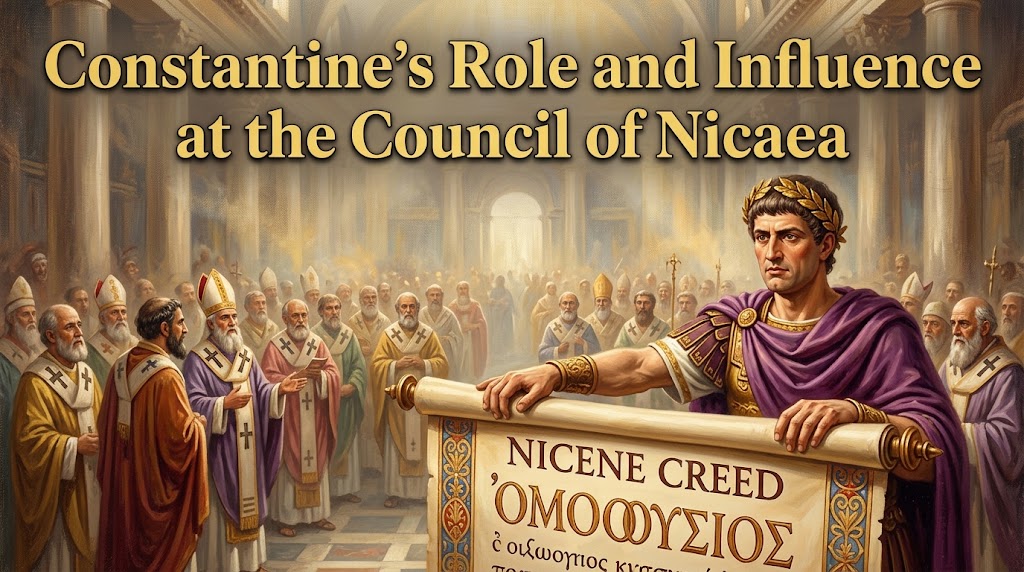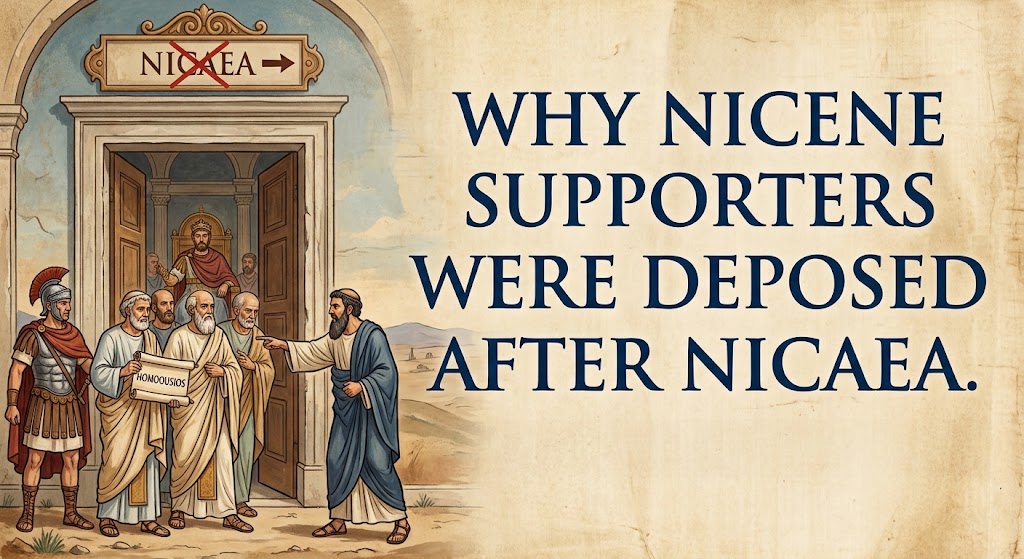
In the decade following the Council of Nicaea (325), the political and theological landscape of the early Church underwent a dramatic reversal: exiled Arians were reinstated while leading supporters of the Nicene Creed were deposed or exiled. This post-Nicene fallout was not driven by an “Arian conspiracy,” but by an intense conflict between Eusebians and Sabellians.
At Nicaea, an anti-Arian alliance allowed Sabellian theologians to influence key Creed formulations—most notably the controversial term homoousios. When Sabellian leaders subsequently claimed that the Council had officially endorsed their single-hypostasis theology, Eusebian bishops resisted what they viewed as a dangerous heresy threatening the distinct personality of the Son. Backed by Emperor Constantine, the Eusebians successfully removed key Sabellian figures like Eustathius of Antioch and Marcellus of Ancyra, causing homoousios to virtually disappear from theological discourse for over two decades.