Summary
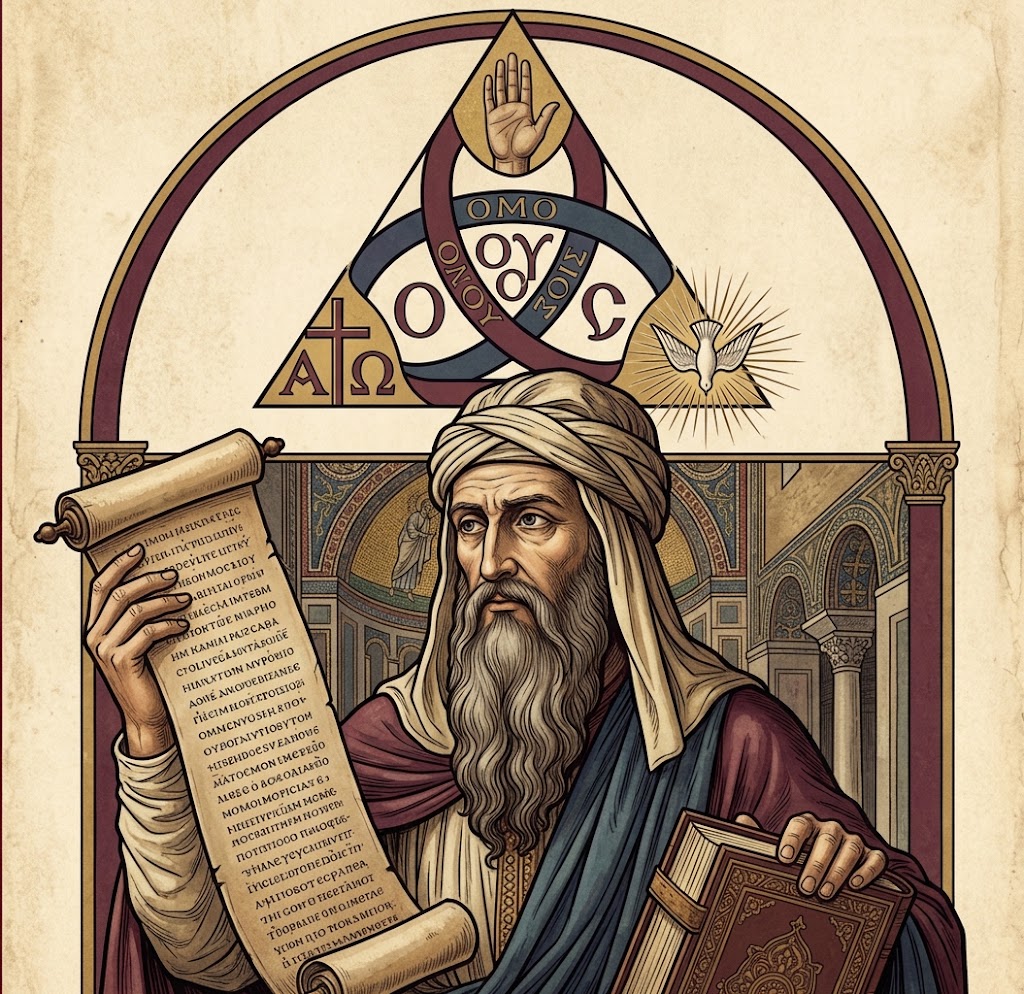
Basil of Caesarea, the first of the Cappadocian Fathers, made a significant contribution to the development of Nicene theology.
According to the Trinity doctrine, God is a single Being, meaning a single mind and consciousness, who exists as three Persons. It is often claimed that Basil taught this same view, but this article argues that the evidence suggests that Basil’s understanding of the three hypostases may be closer to three distinct divine Beings than is often recognized in modern presentations of Trinitarian theology.
This was also the view taught by the so-called Arians. However, while the Arians taught that the Son and the Spirit are ontologically subordinate to the Father, Basil held that the Persons are ontologically equal. The earlier Nicenes also believed that the Son is ontologically subordinate to the Father. In their view, the Son is an internal aspect of the Father: although the Son has the same substance as the Father (homoousios), He remains ontologically subordinate to the Father.
Although Basil taught that the Son and the Spirit are ontologically equal to the Father and share exactly the same substance, he preserved a certain order among the Persons. He also refused to say that the Spirit is homoousios and never described the Spirit as God, but as third in order and dignity. He believed that the Father alone exists without cause. In this way, he maintained the Father’s priority.
The following points indicate that Basil regarded the three Persons as three distinct Beings:
1. He began his career as a Homoiousian. This was a group of Arians who, like all Arians, believed in three distinct divine Beings.
2. For him, homoousios meant that the Son’s substance is like the Father’s, implying distinct substances.
3. He said that homoousios corrects Sabellianism because it keeps the Persons distinct.
4. For Basil, the Persons are instances of divinity, just as people are instances of humanity.
5. Basil described the Father and the Son as having distinct minds and wills, which implies that they are distinct Beings.
6. Basil maintained a hierarchy among the three Persons, which supports the view of three Beings.
Introduction & Purpose
Authors Quoted
Because of research and the discovery of ancient documents over the past 100 years, many scholars now conclude that the traditional account of the Arian Controversy—how and why the church accepted the doctrine of the Trinity—was written by the victors and is fundamentally flawed. [Quotes]
For this reason, this article series is based on books by leading patristic historians from the last 50 years:
Hanson, R.P.C. – The Search for the Christian Doctrine of God – The Arian Controversy 318-381 (1987)
Williams, Rowan – Arius, Heresy & Tradition (2002/1987)
Ayres, Lewis – Nicaea and its legacy, An Approach to Fourth-Century Trinitarian Theology (2004)
Anatolios, Khaled – Retrieving Nicaea (2011)
Who were the Cappadocian Fathers?
Basil was born around 330, extremely well educated in rhetoric and philosophy, and was elected bishop in 370. In some accounts, Basil is the architect of the pro-Nicene triumph. (Ayres, p. 187-188) The three ‘Cappadocian theologians’, Basil of Caesarea, Gregory of Nazianzus, and Gregory of Nyssa “were together decisively influential in bringing about the final form of the doctrine of the Trinity” (Hanson, p. 676).
Distinction between Hypostasis and Ousia
Because these terms are important for this article, it is helpful to begin with a brief overview:
In the doctrine of the Trinity, God is one Being (one ousia) who exists as three Persons (three hypostases) (🔗). In other words, within the Trinity doctrine, ousia and hypostasis have distinct meanings.
However, “for many people at the beginning of the fourth century the word hypostasis and the word ousia had pretty well the same meaning” (Hanson, p. 181).
Importantly, Athanasius, the leader of the Nicenes, also used these terms synonymously:
“Clearly for him (Athanasius) hypostasis and ousia were still synonymous” (Hanson, 440).
Both hypostasis and ousia meant an “individual existence” (Hanson, p. 193), also described as “distinct existences” (Litfin) or “concrete individuals” (Anatolios, xiii). In other words, ousia did not mean ‘substance,’ as in modern English. Ousia was more or less equivalent to ‘person.’ [Quotes]
Basil of Caesarea is usually credited as the first theologian to make the distinction between these two terms that later became the foundation of the doctrine of the Trinity. On the other hand, already in 341, the ‘Arian’ Dedication Creed described the Son as “exact image of the Godhead and the substance and will and power and glory of the Father,” and Asterius, an early ‘Arian,’ also described the Son as “the exact image of the substance, will, glory and power” of the Father (Hanson, p. 37-38).
Basil – Three Beings
The purpose of this article is to show that Basil taught that the Father, Son, and Spirit are three distinct Beings with three distinct minds. This differs from the doctrine of the Trinity, which teaches that the Father, Son, and Spirit are one single Being. Basil’s view may be compared with several other fourth-century views:
Sabellians – One Being
Sabellianism remained a strong force in the fourth century. Sabellians believed that the Father, Son, and Spirit are a single Being with a single mind. The Sabellian minority at the Council of Nicaea supported the term homoousios and understood it to mean “one substance.” In their view, the Son emerges from the Father merely as an energy. See 🔗 for a discussion of Sabellian theology. [Quotes]
Arians – Three Beings
The Arians taught that the Father, Son, and Spirit are three distinct Beings with three distinct minds. For example, the Dedication Creed described the Trinity as “three in hypostasis but one in agreement” (Ayres, p. 119). Asterius, an early leading Eusebian, insists also that “Father, Son, and Spirit are three hypostases” (Ayres, p. 54).
Because, at the time, for most writers, the terms Being (ousia) and Person (hypostasis) were synonymous, when the Arians spoke of “three hypostases,” they meant three Beings. For example, they described the three hypostases as united by agreement, which implies three distinct minds.
The Arians had accepted the term homoousios at Nicaea, but they explained it as meaning simply that the Son is from the Father. At the Council, Emperor Constantine advised that the term should not be interpreted literally, as though God were a substance (🔗). Modern scholars conclude that homoousios, at the Nicene Council, had a looser meaning. [Quotes]
Original Nicenes – One Being
Nicene theologians before the Cappadocians, such as Alexander and Athanasius, understood the Father, Son, and Spirit, like the Sabellians, to be a single Being with a single mind. They said that the Father, Son, and Spirit are a single hypostasis, meaning a single Person or Being. [Quotes]
See 🔗 for a discussion of Nicene theology. Readers might expect that the original Nicenes taught that God is one Being (one ousia) and three Persons (three hypostases), as in the Trinity doctrine, but that concept did not yet exist. Since Alexander and Athanasius regarded ousia and hypostasis as synonyms, in their view, the Father and Son are a single Being (ousia) and a single Person (hypostasis).
Ontological Equality
Original Nicenes – The Subordinate Son
When the Controversy began, all theologians regarded the Son as subordinate to the Father:
“With the exception of Athanasius, virtually every theologian, East and West, accepted some form of subordinationism at least up to the year 355; subordinationism might indeed, until the denouement (end) of the controversy, have been described as accepted orthodoxy” (Hanson, p. xix).
Even Athanasius, the great defender of Nicaea, understood the Son as subordinate. In the Nicene view, the Son is an internal aspect of the Father. “In the Father we have the Son: this is a summary of Athanasius’ theology” (Hanson, p. 426). Therefore, the Son is ontologically subordinate to the Father. For example, Athanasius described the Son as homoousios with the Father, but he would never say that the Father is homoousios with the Son. He also described the Word as “proper to” the Father—that is, as belonging to the Father. More specifically, he believed that the Son is the Father’s own and only Wisdom. [Quotes]
Basil – Ontological Equality
Basil was the first to propose that the Father and the Son are ontologically equal:
“In all the previous discussions (before Basil) of the term (homoousios) … a certain ontological subordination is at least implied” (Ayres, p. 206).
“In Basil, the Father’s sharing of his being involves the generation of one identical in substance and power” (Ayres, p. 207).
The next section will show that Basil, like the Eusebians (Arians), taught three hypostases. What made Basil different, however, was his belief that the Father, Son, and Spirit are “identical in substance and power.”
Three Distinct Beings
In Trinitarian theology, the three Persons are one single Being. Basil’s theology is often described in ways that suggest he held the same view: one undivided substance, or Being. This section argues, however, that Basil understood the Father, Son, and Spirit as three distinct substances—that is, three distinct Beings.
1. Basil began as a Homoiousian.
Basil did not begin his career as a Nicene. Nor did the Cappadocian Fathers derive their theological tradition from Athanasius. Rather, Basil began as an “Arian”—more specifically, as a Homoiousian. [Quotes]
The Homoiousians were one of the Arian groups and, as noted above, all Arians believed that the Son is a distinct divine Being. Like other Arians, Basil began his career by confessing three distinct Beings in God. As a Homoiousian, he believed that the Son’s substance is similar to the Father’s, yet distinct from it, which means that the Son is a distinct Being. Over time, however, Basil gradually moved toward Nicene theology. [Quotes]
2. Homoousios means ‘of like ousia’
Literally, the term homoousios means “same substance,” from homós (same) and ousía (substance).
Homoousios can be understood in two ways. When two entities are said to be of the “same substance,” this may mean either that they are:
(1) one single substance, or
(2) two distinct but identical substances.
The doctrine of the Trinity adopts the first interpretation: the Father and Son are one single substance. Because there is only one substance, this is called numerical sameness.
In the second interpretation, the Persons of the Godhead are distinct substances with the same qualities. This is called generic sameness.
After Basil had moved away from the Homoiousian formula of “similar substance” and had accepted the term homoousios, he claimed that homoousios means that the Son’s substance is like the Father’s. “He says that in his own view ‘like in respect of ousia’ (the slogan of the party of Basil of Ancyra) was an acceptable formula, provided that the word ‘unalterably’ was added to it, for then it would be equivalent to homoousios” (Hanson, p. 694). If the Son’s substance is “like” the Father’s, then the Father and Son are two distinct substances. [Quotes]
3. Homoousios keeps the Persons distinct.
Basil wrote:
“This expression (homoousios) also corrects the fault of Sabellius for … (it keeps) … the Persons (prosopon) intact, for nothing is consubstantial with itself” (Hanson, pp. 694-5).
In Sabellianism, the Father and Son are one single Being—both one ousia and one hypostasis. By saying that homoousios corrects this error, Basil interprets the term as describing the Father and Son as distinct Persons and distinct hypostases. [Quotes]
One might argue that this does not exclude the possibility of the Father and Son as a single Being (ousia). However, for Sabellians and early Nicenes, there was no distinction between hypostasis and ousia. In their view, the Father and Son are both one ousia (Being) and one hypostasis (Person). If homoousios corrects the faulty ‘one Person’ view, it probably also corrects the ‘one Being’ view.
Furthermore, note that Basil states that “nothing is consubstantial with itself.” “Consubstantial translates homoousios, which means ‘same substance. By saying that nothing is of the same substance with itself, Basil is referring to two substances (two Beings). This, again, implies that the Father and Son are two distinct Beings.
4. The Persons = Instances of Divinity
For Basil, “human persons are particularly appropriate examples” of “the nature of an individual divine person” (Ayres, pp. 207-8). He regarded the divine Persons (hypostases) as instances of a “generic” Godhead, just as human beings are instances of a generic humanity. [Quotes]
Adolf von Harnack agreed with this article when he stated: “Basil and all the Cappadocians interpreted homoousios only in a ‘generic’ sense . . . that unity of substance was turned into equality of substance” (Hanson, p. 696). For Hanson, Basil’s description of the three Persons, as instances of a generic Godhead, provides the strongest support for Harnack’s hypothesis. [Quotes]
This point also explains Basil’s understanding of the terms hypostasis and ousia. For him, “that relation which the general has to the particular, such a relation has the ousia to the hypostasis” (Hanson, p. 692). [Quotes]
5. The Father and Son have distinct minds.
Basil described the Father and Son as having distinct minds and wills, which implies that they are distinct Beings. For example, “Basil … speaks of the Father choosing to work through the Son—not needing to. Similarly, the Son chooses to work through the Spirit, but does not need to” (Ayres, p. 208). [Quotes]
6. Order among the Persons
Basil maintained a certain order among the Persons. For example, he referred to the Holy Spirit as third in rank. This implies that they are distinct existences. [Quotes]
6a Holy Spirit – Not homoousios or God
Basil described the Son as homoousios with the Father, but he never described the Holy Spirit as homoousios with the Father and Son (Hanson, p. 694). [Quotes]
Nor was he willing to describe the Spirit directly as God. He described the Spirit as uncreated and divine, but not as homoousios or theos. [Quotes]
6b Father = The only ultimate principle
Since Basil taught that the Father and Son have the same substance, he was sensitive to the charge of two ultimate principles, two Beings who exist without cause and give existence to everything else. To address this danger, Basil identified the Father alone as the ultimate principle, the only Being who exists without a cause. In this way, Basil maintained the priority of the Father. [Quotes]
In summary, Basil preserved a certain order among the Persons, refused to call the Spirit homoousios and God, described the Spirit as third in order and dignity, taught that the Father alone exists without cause, and maintained the Father’s priority. This supports the conclusion from the previous points, namely, that he believed the Father, Son, and Spirit to be distinct Beings.
Conclusions
Basil began his career as a Homoiousian, but he remained semi-Homoiousian in important respects. The Homoiousians taught that the Son is a second divine Being with a substance similar to the Father’s. Basil went further, arguing that the Son is a second divine Being whose substance is exactly the same as the Father’s.
“Basil has moved away from but has not completely repudiated his origins” (Hanson, p. 694).
“Basil still seems to view the relationship between Father and Son in a fundamentally Homoiousian way” (Ayres, p. 190).
Lienhard proposed that the opposing groups in the Arian Controversy may be described as:
- Miahypostatic, meaning that the Father and Son are a single hypostasis, as the Sabellians and original Nicenes held, and
- Dyohypostatic, meaning that the Father and Son are two hypostases, as the Eusebians / Arians beluieved.
Discussing this proposal, Anatolios confirms that Basil saw the Father and Son, like the ‘Arians,’ as distinct Beings when he states the Cappadocians would have to be designated as dyohypostatic. [Quotes]
A further indication that Basil’s theology seems to be inherited from the Eusebian line is the strong similarity between his theology and the Eusebian Dedication Creed of 431 (🔗). That creed, like Basil, described the Son as the exact image of the Father’s substance, and made the same distinction between hypostasis and ousia that Basil made.
Contemplation
For Basil, we can only understand the Father, Son, and Spirit through “contemplation” (epinoia – ἐπίνοια), which he explained as “concepts developed by the human mind” through “a process of reflection and abstraction” that “throws away the letter. But Eunomius, Basil’s Heterousian rival, against whom he wrote three books, dismissed ἐπίνοια as a way of gaining knowledge of God as unreliable (Ayres, p. 191-3): [Quotes]
Basil and Philosophy
It is customary to accuse Arius of corrupting theology with philosophy, but we misunderstand him completely if we see him as primarily a self-conscious philosophical speculator. The true philosophers were the Cappadocians. The distinction between a common deity and the differentiation of Persons, discussed above and central to Basil’s theology, was derived not from the Bible but from pagan Stoic philosophy. [Quotes]
Theological Implications
The article is not merely reinterpreting Basil. It is implicitly challenging major foundations of classical Trinitarian theology.
1. Basil & Social Trinitarianism
In classical Western theology, especially Augustine’s and later Catholic and Protestant traditions, there is:
-
-
- one divine mind,
- one divine will,
- one divine consciousness.
-
The article argues that Basil taught:
-
-
- three minds,
- three wills,
- three centers of consciousness.
-
This resembles an extreme form of what modern theologians call social trinitarianism.
2. Was Basil an Arian or Nicene?
The article argues that Basil retained the basic Arian assumption of three distinct divine beings while differing from them on the issue of equality of substance. Three distinct divine Beings in a hierarchy, even with one identical divine nature, are closer to Arianism and considerably different from both original Nicene theology and later orthodox Trinitarianism.
3. Challenge to the Traditional Narrative
The standard story is:
-
-
- Nicaea affirmed the deity of Christ.
- The Cappadocians clarified the language.
- The doctrine of the Trinity reached its mature form.
-
The article suggests something different:
-
-
- Earlier Nicenes were essentially “one-being” theologians.
- Basil reworked the Arian framework to accept homoousios.
- The modern Trinity doctrine blends Basil’s Arian language with original Nicene concepts.
-
Other Articles
Other Core Articles
🔗 All articles on this Site
🔗 Daniel’s Little Horn
🔗 Daniel 9 – Verse-by-Verse
🔗 Daniel 9 – Four Alternative Interpretations
🔗 Revelation 13 Dragon, Roman Empire
🔗 Revelation 13 Beast, Roman Christian Authority
🔗 What is the Mark of the Beast?
🔗 The Trinity doctrine
🔗 The True Origin of the Trinity Doctrine
🔗 The Sabbath was part of the Arian Controversy.
🔗 Christ’s Return
Other Article Series
🔗 The Antichrist in Daniel 2, 7, 8, and 11
🔗 The 490 years of Daniel 9
🔗 Book of Revelation
🔗 Christology
🔗 Origin of Evil
🔗 Death, Eternal Life, and Eternal Torment
For general theology, I recommend Graham Maxwell.