The Mark of the Beast Identified
INTRODUCTION Purpose This site identifies the Mark of the Beast through many articles, including articles on Daniel and Revelation. Another

INTRODUCTION Purpose This site identifies the Mark of the Beast through many articles, including articles on Daniel and Revelation. Another
This article re-examines the fourth-century Arian Controversy through the lens of modern patristic scholarship, drawing primarily on the works of R.P.C. Hanson, Rowan Williams, and Lewis Ayres. It argues that the conventional account—rooted largely in Athanasius’s polemical strategy—is fundamentally flawed. Arius was not a radical innovator seeking to launch a new heresy, but rather a theological conservative operating within the established dyohypostatic tradition of the pre-Nicene Church. Furthermore, the anti-Nicenes did not form a unified “Arian” party or view Arius as their leader. Consequently, scholars increasingly recognize that calling the entire sixty-two-year dispute the “Arian Controversy” is a serious historical misnomer that obscures the complex, diverse theological trajectories of the period.
This article examines the true nature of Arius’ theology and the fourth-century Arian Controversy, moving past traditional biases and polemics rooted in Athanasius’ writings. Drawing on contemporary patristic scholarship—including the works of Rowan Williams, R.P.C. Hanson, and Lewis Ayres—the study shows Arius as a thinker and exegete of resourcefulness, sharpness, and originality, who was regrettably and detrimentally crushed.
While Arius himself wrote that the Son of God does not change, Athanasius said that Arius taught the exact opposite: that the Son is “like all others … subject to change.” This article explains why Arius described the Son as created but still unchangeable.
This article examines the common historical claim—originated by opponents such as Athanasius—that the fourth-century theologian Arius taught that literal time preceded the Son of God. Drawing on modern patristic scholarship, the study demonstrates that this attribution misrepresents Arius. While Arius maintained that the Father existed prior to the Son in a metaphysical or logical sense within the timeless infinity beyond the cosmos, he viewed the Son as existing timelessly before the creation of the universe and ordinary chronological time.
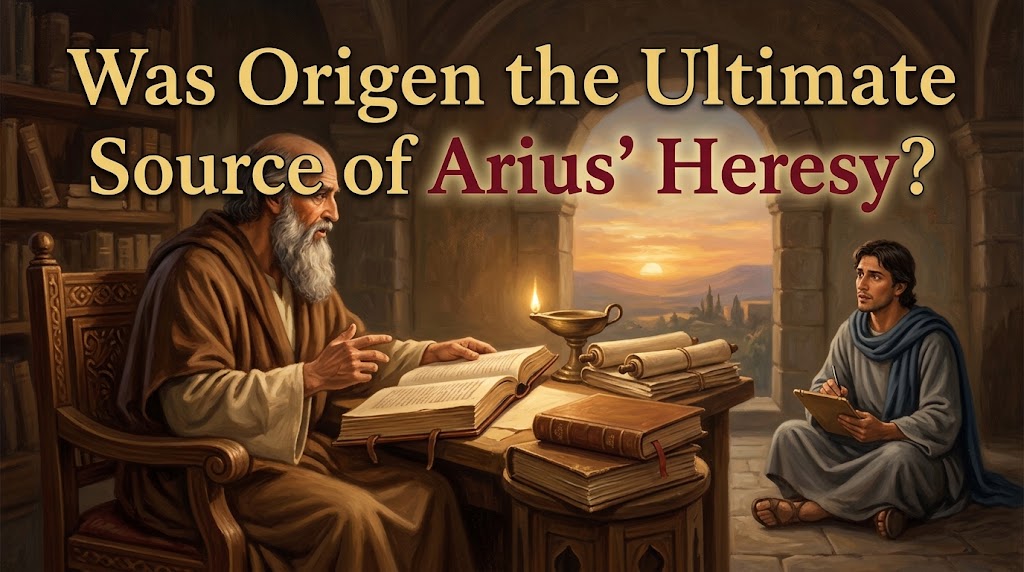
This article examines whether Origen served as the ultimate source of Arius’ theology, comparing their views through the insights of leading patristic scholars such as Rowan Williams, R.P.C. Hanson, and Lewis Ayres. While both thinkers maintained that only the Father exists without cause and rejected the later Nicene concept of the homoousios, significant divergences emerge. Origen taught the eternal generation of the Son and viewed the Father-Son relationship as intrinsic to the divine life, whereas Arius introduced a sharper subordination and claimed there was a time when the Son did not exist. Ultimately, the evidence indicates that Arius cannot be categorized simply as an Origenist, and that the fourth-century Eusebians stood much closer to Origen’s theological tradition than Arius did.
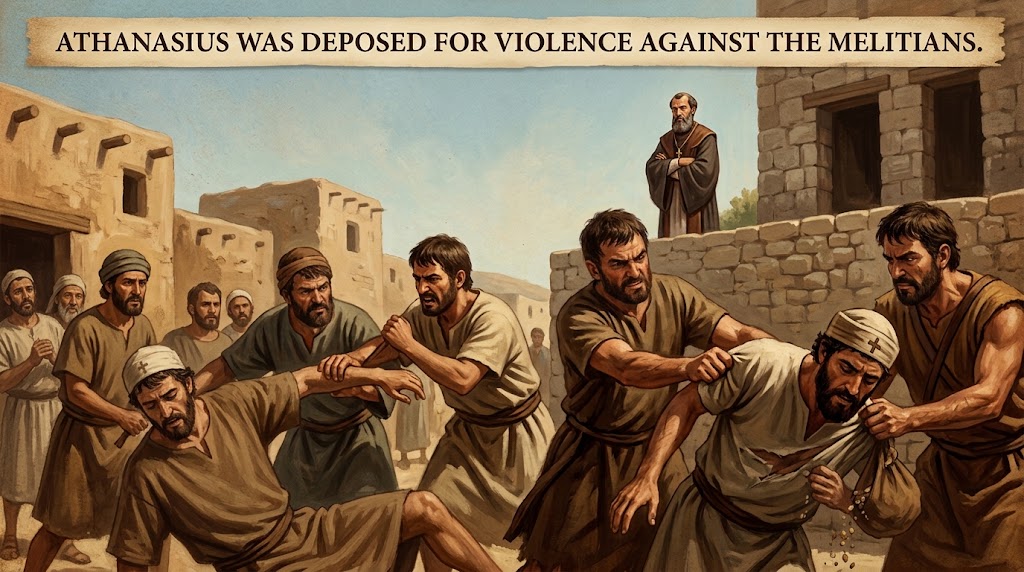
Traditionally revered as a gentle hero of the fourth-century Arian Controversy, Athanasius of Alexandria has long enjoyed a legacy of unblemished orthodoxy. However, drawing on R.P.C. Hanson’s seminal study The Search for the Christian Doctrine of God and 20th-century papyrus discoveries, this article re-evaluates the historical record. It demonstrates that Athanasius was justly deposed and excommunicated in 335 by the Council of Tyre for employing barbaric, thug-like violence and strong-arm tactics against the Melitian Christians in Egypt.
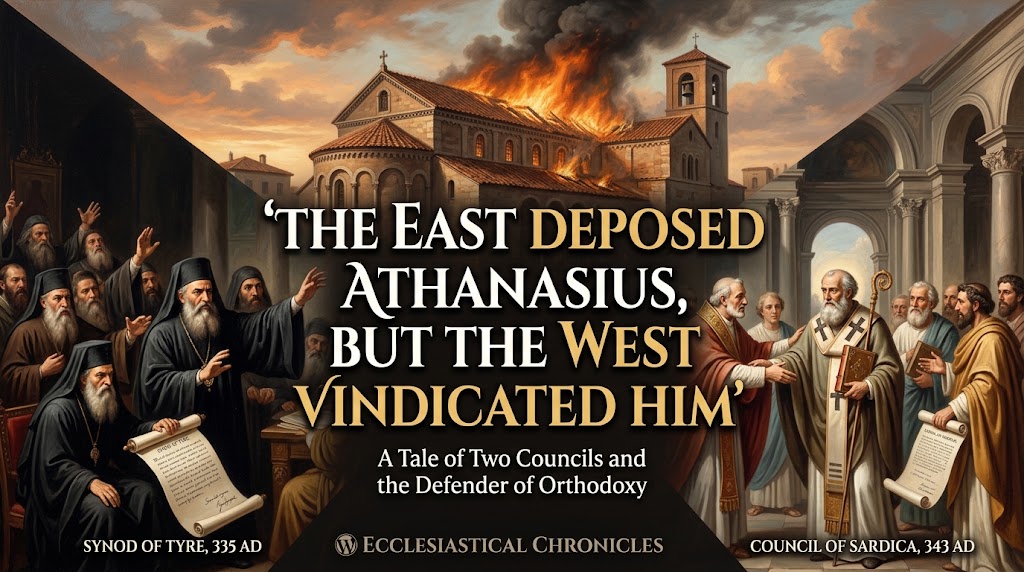
This article examines the critical historical shift between the Council of Tyre in 335, where the Eastern Church deposed and excommunicated Athanasius, and the Council of Rome in 341, where Bishop Julius of Rome formally vindicated him. Drawing on modern patristic scholarship—including works by R.P.C. Hanson, Lewis Ayres, and Rowan Williams—the study analyzes Athanasius’s polemical strategy of labeling his opponents as “Arians,” the reaction of the Eastern bishops at Antioch, and how Rome’s intervention drew the Western Church into the heart of the Arian Controversy, ultimately deepening the schism between East and West.
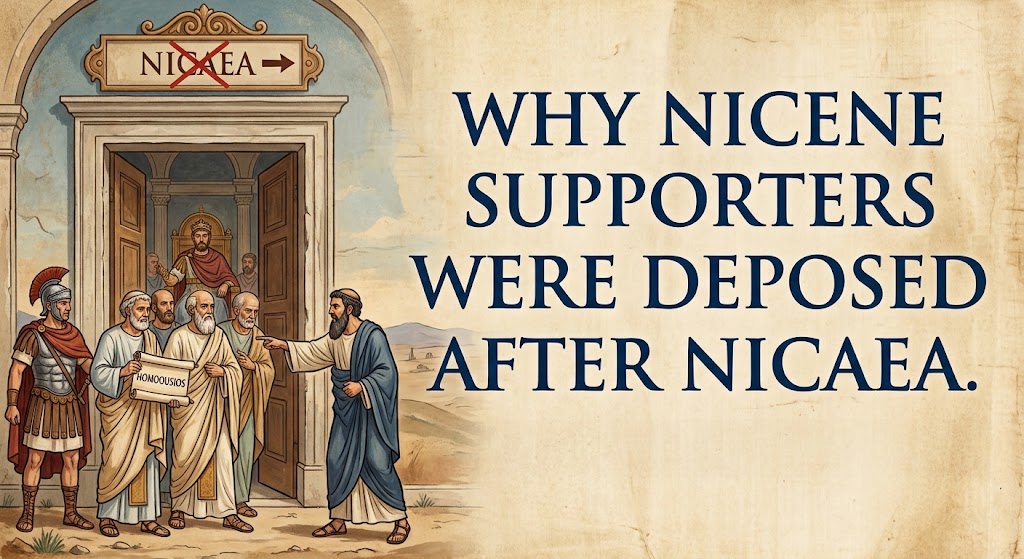
In the decade following the Council of Nicaea (325), the political and theological landscape of the early Church underwent a dramatic reversal: exiled Arians were reinstated while leading supporters of the Nicene Creed were deposed or exiled. This post-Nicene fallout was not driven by an “Arian conspiracy,” but by an intense conflict between Eusebians and Sabellians.
At Nicaea, an anti-Arian alliance allowed Sabellian theologians to influence key Creed formulations—most notably the controversial term homoousios. When Sabellian leaders subsequently claimed that the Council had officially endorsed their single-hypostasis theology, Eusebian bishops resisted what they viewed as a dangerous heresy threatening the distinct personality of the Son. Backed by Emperor Constantine, the Eusebians successfully removed key Sabellian figures like Eustathius of Antioch and Marcellus of Ancyra, causing homoousios to virtually disappear from theological discourse for over two decades.
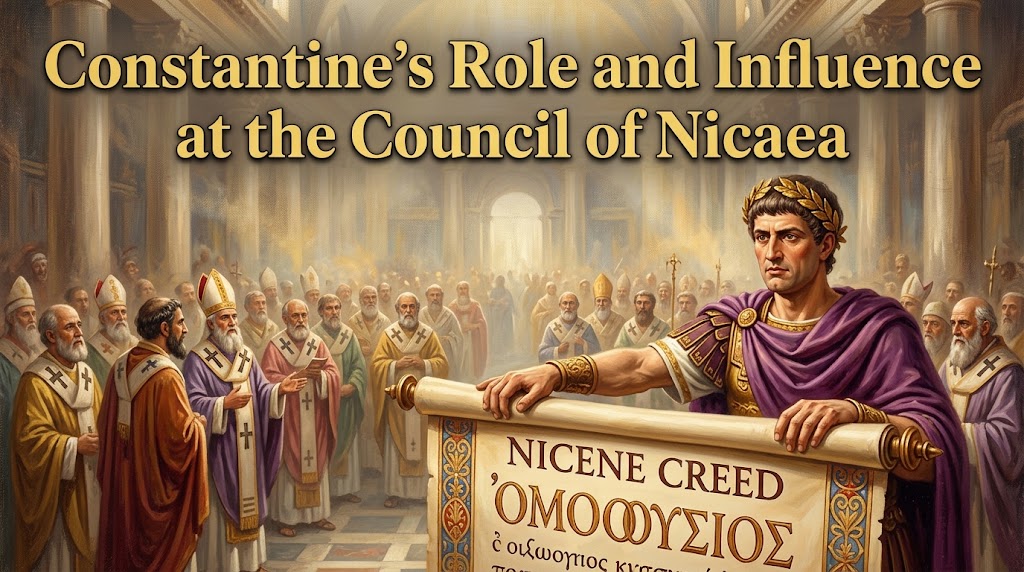
This article examines Emperor Constantine’s decisive role in shaping the theological outcomes of the Council of Nicaea in 325 AD. Drawing on modern Patristic scholarship—including the work of R.P.C. Hanson, Lewis Ayres, and Rowan Williams—it challenges traditional narratives that present Nicaea as a purely ecclesiastical assembly. Instead, the analysis shows that Constantine convened the council on his own authority, appointed his advisor Ossius of Cordoba to preside, actively guided the proceedings, enforced the inclusion of the controversial term homoousios, and exiled non-signers. His purpose was not to determine true doctrine, but to preserve imperial unity against division. Consequently, he effectively served as the head of the church.