Did Jesus claim to be God (John 10:33)?
In this verse, the Jews accused Jesus of claiming to be God. Based on Jesus’s debate with the Jews in this chapter, what did Jesus claim to be? Is verse 33 correctly translated?

In this verse, the Jews accused Jesus of claiming to be God. Based on Jesus’s debate with the Jews in this chapter, what did Jesus claim to be? Is verse 33 correctly translated?
1 Corinthians 8:6 shows that God is the Father alone. Trinitarians counter by saying that, in this verse, Jesus is God because (1) He co-created with God, (2) “God” and “Lord” are synonyms, and (3) this verse divides the words of the Shema between the Father and the Son. This article challenges the Trinitarian proposal.
Philippians 2:5-11 describes four chronological stages of Christ’s life – before He became man – His human life – His death – and His exaltation after His ascension. Do these verses describe Him as God? If Jesus is not God, why will every knee bow to Him?
This article refutes the liberal “Maccabean thesis,” which asserts that the Book of Daniel was written after the fact in the 2nd century B.C. and that its predictions center on Antiochus IV Epiphanes. By examining textual and thematic links—particularly between Daniel 9 and Daniel 11—the author demonstrates that the “Prince of the Covenant” broken by the “vile person” (Dan 11:22) refers to Jesus Christ. Consequently, the “vile person” represents the Roman Empire and its ultimate Antichrist continuation rather than Antiochus IV, who died two centuries prior to Christ. While Antiochus IV served as a historical type or partial fulfillment, the full scope of Daniel 11 describes events culminating in the end-time Antichrist.
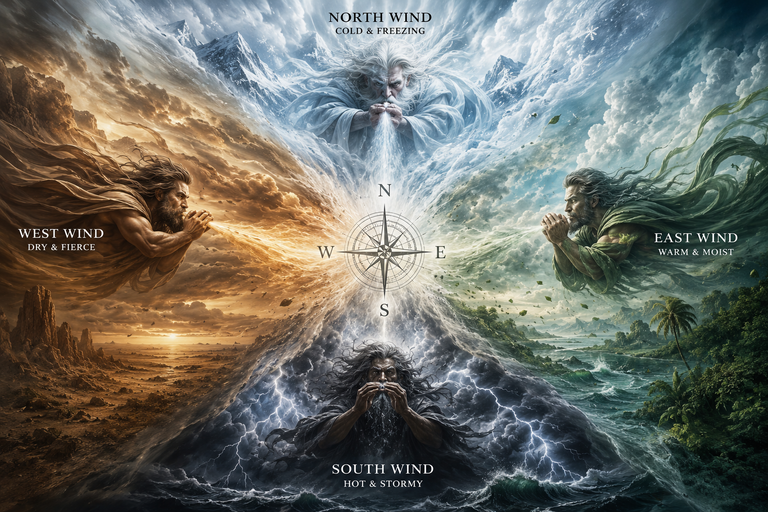
This article examines the origin of the “Little Horn” described in Daniel 8:8–9 to determine whether it represents a Greek power (such as Antiochus IV) or a Roman continuous historical power. By analyzing the original Hebrew text, the author highlights a grammatical gender distinction: in verse 8, “horns” (qarnot) and “winds” (ruchot) are feminine, while “heavens” (shamayim) is masculine. In verse 9, the masculine pronoun “them” refers back to “heavens,” while the feminine “one” refers to “winds.” Consequently, the phrase “out of one of them” means the horn emerges from one of the four cardinal compass directions (winds of heaven) rather than from one of the four Greek horns. Synthesizing this grammatical evidence with the vision of Daniel 7, the article concludes that the Little Horn is Roman in origin, representing a long-term religious-political system rather than a short-lived ancient Greek ruler.

This article examines the primary interpretations of the “Little Horn” in Daniel 8, an apocalyptic symbol representing the Antichrist. Building on prior studies connecting Daniel’s visions of world empires—Babylon, Medo-Persia, Greece, and Rome—the author explores three main theological frameworks regarding the horn’s identity: the Preterist view (identifying the horn as the 2nd-century BC Seleucid king Antiochus IV Epiphanes), the Futurist view (seeing it as an end-time persecutor before Christ’s return), and the Historicist view (identifying it with the Roman State Church that evolved after the fall of Rome). The article dives deeply into the Historicist perspective, detailing the historical shift from early subordinationist Christology to post-Nicene Orthodoxy, the political influence of emperors like Constantine and Theodosius I, and how legislative actions like the Edict of Thessalonica established state-sponsored religious authority.
In Dispensationalism, the first 483 years of Daniel 9 end a few days before the Cross, and the last 7 years describe an end-time Antichrist.
Summary of the Book of Nehemiah. Judea was completely destroyed by the Babylonians. Through Nehemiah and others, God effectively gave Israel a new beginning.
God promised, through Jeremiah, to restore Israel after 70 years. Daniel prayed for this promise. The prophecy confirmed that God would renew the Covenant.
In the RSV, the messiah appears after 49 years. Therefore, he cannot be Christ. In the NASB, the messiah appears after 483 years.