Daniel 7 Explained: What is the Fourth Beast?
Daniel 7 and 8 symbolize empires as animals. Dan 8 names its animals. This article identifies the fourth beast in Daniel 7 by comparing it to Daniel 8.

Daniel 7 and 8 symbolize empires as animals. Dan 8 names its animals. This article identifies the fourth beast in Daniel 7 by comparing it to Daniel 8.
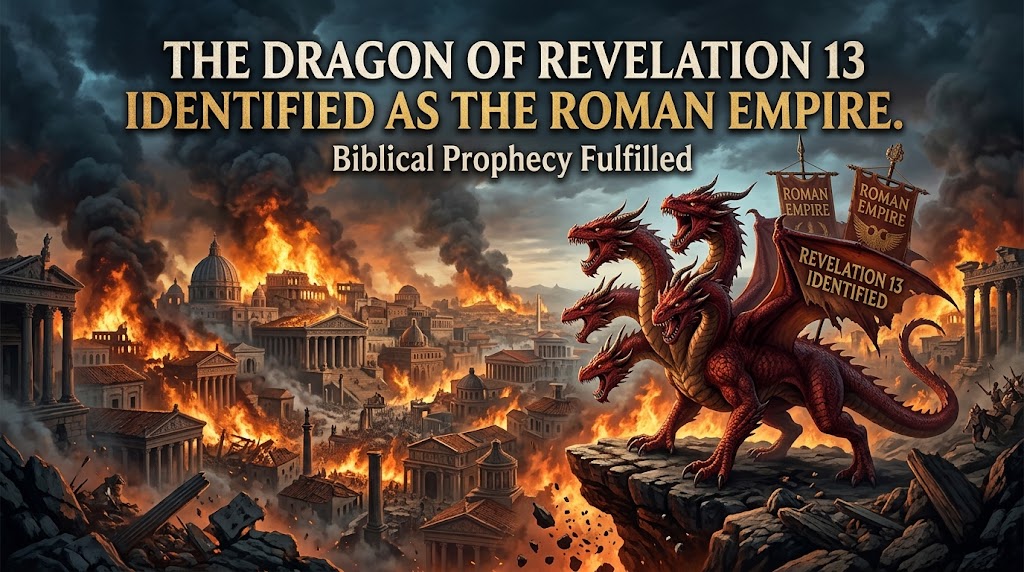
This article identifies the seven-headed Dragon in Revelation 13 by analyzing its connections to Daniel 7. It demonstrates that Revelation’s three seven-headed beasts correspond directly to the animal empires of Daniel’s vision, spanning from antiquity to Christ’s return. While Revelation 12 uses “dragon” broadly to symbolize Satan and various earthly powers throughout history, its specific pairing with the Sea Beast in Revelation 13 aligns it directly with Daniel’s terrible fourth beast. Consequently, when depicted alongside the Beast, the Dragon represents the historic Roman Empire—the power that eventually fragmented into later earthly authorities.
This article identifies of the Sea Beast in Revelation 13 by establishing its parallels to the 11th horn of Daniel 7, which came into existence when the Roman Empire fragmented. By examining shared traits—such as arising from the fourth kingdom (Rome), speaking blasphemies, persecuting saints for “a time, times, and half a time,” and persisting until Christ’s return—the post argues that the Beast represents the continuation of Roman authority following the empire’s fragmentation. Specifically, the article concludes that this enduring Roman entity manifests as a Christian organization, operating throughout history until Christ’s return.
INTRODUCTION Purpose This site identifies the Mark of the Beast through many articles, including articles on Daniel and Revelation. This article
This article presents a comprehensive analysis of New Testament passages concerning the Second Coming of Jesus Christ. By examining key scriptures across the Gospels, Epistles, and Revelation, it evaluates how, when, and under what conditions Christ’s return will occur. The study highlights that the Second Coming is described as a visible, audible, and sudden global event accompanied by signs in the heavens, the final judgment, the resurrection of the dead, and the gathering of the elect. Additionally, the article addresses early Christian expectations regarding the timing of Christ’s return, challenging popular theological concepts such as a secret rapture or the immediate heavenly afterlife prior to the resurrection, serving as foundational preparation for broader eschatological studies.
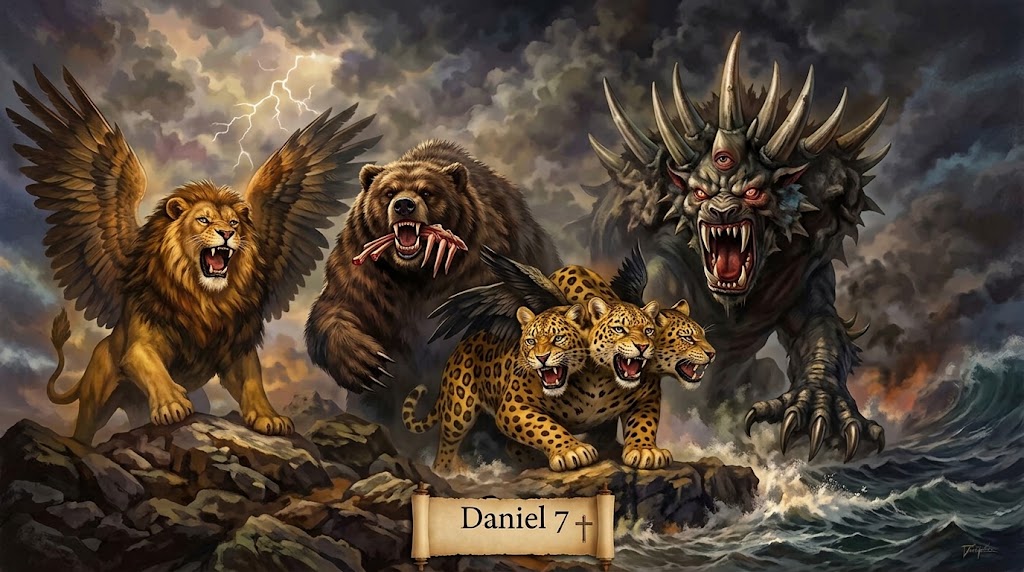
This article presents an analysis of Daniel 7, focusing on the identity of the four beasts, the ten horns, and the “Little Horn” (Antichrist). It outlines the structural parallels between the four metals of Daniel 2 and the four beasts of Daniel 7 to argue for a consecutive sequence of global empires culminating in a divided state. The text directly contrasts the conservative interpretation—which views the fourth empire as Rome and the prophecy as predictive—against critical and liberal academic models that date the text to the 2nd century BC under Antiochus IV Epiphanes. Through textual cross-referencing and arguments regarding horn chronology, the author seeks to validate the historical reliability and divine inspiration of the apocalyptic vision.
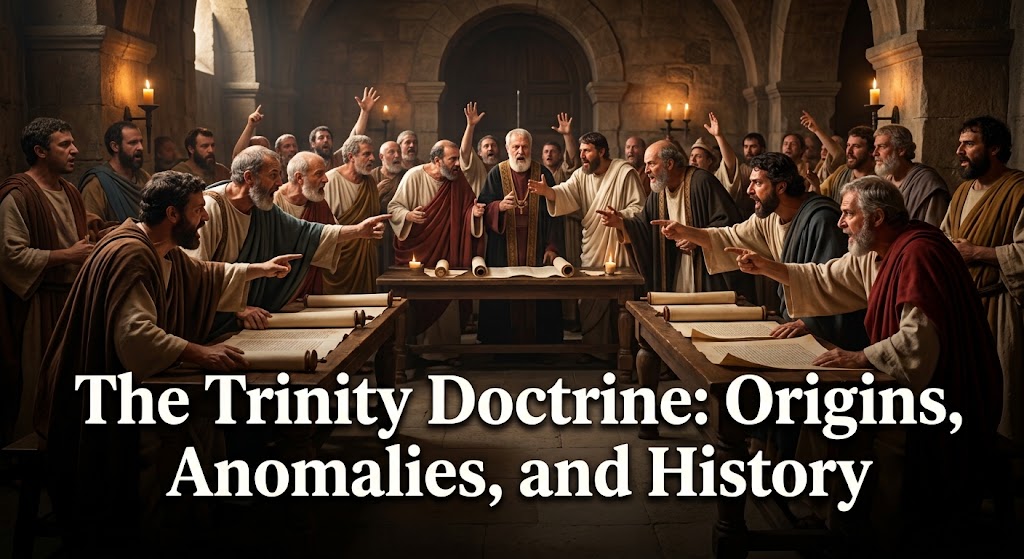
This article critically examines the standard orthodox Trinity doctrine, highlighting key theological and logical contradictions between traditional Trinitarian theology and biblical scripture. It demonstrates that describing God as “three Persons” or “three hypostases” in modern theological discourse often proves misleading, as orthodox Trinitarianism asserts a single center of mind, consciousness, and will. The text evaluates historical perspectives on the Incarnation—contrasting Athanasian, Chalcedonian, and Arian views—to analyze how the doctrine attempts to reconcile the divine and human natures of Christ. Finally, the article traces the historical origin of the doctrine, arguing that the Trinity was not formulated through unanimous church consensus, but was heavily enforced and standardized as state religion by the 4th-century Roman Empire under Emperor Theodosius.
This article provides a comprehensive overview and evaluation of the 70-week (490-year) prophecy in Daniel 9:24–27. It examines how the biblical text connects Daniel’s prayer to the Levitical covenant pattern, demonstrating that the 70 weeks represent a divine renewal of God’s covenant with Israel following the 70-year Babylonian exile. The study contrasts the four main theological approaches to the prophecy: Liberal (dating events to Antiochus Epiphanes in the 2nd century BC), Dispensational (proposing a future 70th-week tribulation period), Symbolic (treating the timeframes as allegorical representations of the Church age), and Historic-Messianic. Highlighting Artaxerxes’s first decree in 458/7 BC as the starting point, the author argues for the Historic-Messianic framework—concluding that the 70th week was literally fulfilled from the start of Jesus’ ministry through His death and ending with the martyrdom of Stephen.
TABLE OF CONTENTS Book of Daniel • Antichrist (Dan 2, 7, 8, 11) • Daniel 9 • Is Daniel a
Revelation’s Beast is equivalent to Daniel’s 11th horn (see here). That horn comes out of the 4th animal in Daniel